Your Phone Number Is a Master Key — and Criminals Already Know How to Copy It
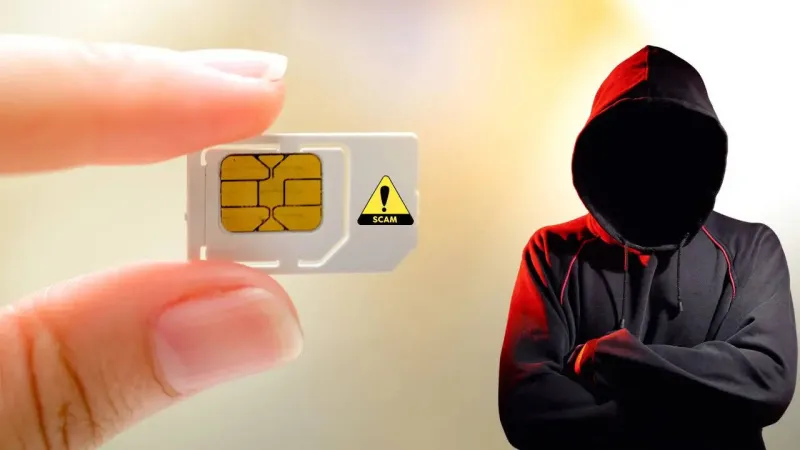
Photo: SIM card smartphone hacker identity theft security, via images.timesnownews.com
For most Americans, a phone number feels like a relatively mundane piece of personal information — something you hand out at the dentist's office or type into a pizza delivery app. But in the eyes of a growing class of cybercriminals, that ten-digit string represents something far more valuable: a universal authentication token capable of unlocking bank accounts, cryptocurrency wallets, email inboxes, and social media profiles in a matter of minutes.
The technique is called SIM swapping, and it has evolved from a niche hacker trick into a mainstream financial crime that the FBI, the Federal Communications Commission, and consumer advocacy groups are all scrambling to address. According to the FBI's Internet Crime Complaint Center, SIM-swapping complaints jumped from roughly 1,600 cases in 2019 to more than 2,000 in a single year, with reported losses exceeding $68 million — and those figures almost certainly undercount the true scope of the problem.
What Actually Happens During a SIM Swap
Every mobile phone operates through a small chip called a SIM card, which binds your phone number to your physical device. When you get a new phone, your carrier transfers that binding — a routine process called a SIM swap — so your existing number rings on the new hardware. It is a legitimate, necessary feature of modern cellular networks.
Criminals have learned to weaponize it.
In a fraudulent SIM swap, an attacker contacts your wireless carrier — by phone, online chat, or sometimes by walking into a retail store — and impersonates you. Armed with pieces of your personal information gathered from data breaches, social media profiles, or phishing campaigns, they convince a carrier representative to reassign your phone number to a SIM card they control. From that moment forward, every call and text message meant for you — including the one-time passcodes that protect your most sensitive accounts — goes directly to the attacker.
The window of opportunity can be shockingly brief. Victims have reported losing access to their email, their cryptocurrency exchange accounts, and their bank accounts within fifteen to thirty minutes of the swap taking place, often while they sleep.
Real People, Real Losses
In 2022, federal prosecutors charged a group of individuals known online as "the Com" with conducting a series of SIM swap attacks targeting high-net-worth cryptocurrency holders. One victim, a technology entrepreneur in California, lost approximately $1.8 million in digital assets over the course of a single evening. Another case involved a college student in Michigan whose entire savings — accumulated through years of small cryptocurrency investments — vanished overnight after his number was transferred without his knowledge.
The Justice Department has also prosecuted cases involving teenagers. In 2021, a 19-year-old in Indiana was sentenced to federal prison after participating in a SIM swap scheme that netted more than $1 million in stolen cryptocurrency. The relative youth of many perpetrators reflects the low barrier to entry: tutorials circulate in private Discord servers and Telegram channels, and the social engineering scripts used to deceive carrier employees require no technical sophistication whatsoever.
The Social Engineering Script
Understanding how these attacks succeed requires understanding the human element. Carrier call centers handle thousands of account changes every day. Representatives are trained to be helpful and efficient, and the metrics by which they are often evaluated — call resolution time, customer satisfaction scores — create structural incentives that work against rigorous identity verification.
A skilled SIM swapper will typically open a conversation by expressing urgency: a lost phone, a damaged SIM, an upcoming trip abroad. They will recite the victim's account PIN, billing address, and the last four digits of their Social Security number — details routinely exposed in large-scale data breaches such as the 2021 T-Mobile incident, which compromised the records of more than 50 million customers. If the first representative is skeptical, the attacker simply hangs up and tries again, a technique known in social engineering circles as "rep hunting."
In some documented cases, criminals have gone further, bribing carrier employees directly. A 2023 federal indictment in New Jersey alleged that members of a fraud ring paid insiders at multiple carriers between $1,000 and $1,500 per successful swap — an arrangement that rendered even the most cautious customer behavior irrelevant.
The Regulatory Gap
The FCC has acknowledged the problem and, in late 2023, adopted new rules requiring carriers to implement additional authentication safeguards before processing SIM transfers. Carriers are now mandated to notify customers immediately when a SIM swap is initiated and to offer mechanisms for customers to place port-out freezes on their accounts.
Critics, however, argue that the rules do not go far enough. The notification requirement is useful only if a customer is awake and paying attention; by the time most people see an alert, the damage is already done. Consumer advocacy organizations have pushed for mandatory delays — a cooling-off period of several hours before any SIM transfer is finalized — but the wireless industry has resisted, citing the inconvenience to legitimate customers who genuinely need rapid service.
How to Protect Yourself Right Now
The good news is that several concrete steps can meaningfully reduce your exposure, even in the current regulatory environment.
Place a SIM lock or port freeze on your account. All major US carriers — AT&T, Verizon, and T-Mobile — offer some form of account lock that requires additional verification before a SIM transfer can proceed. On T-Mobile, this is called "SIM Protection." Verizon offers a "Number Lock" feature. AT&T allows customers to set a passcode specifically for account changes. Log into your carrier's app or website and enable whichever option is available.
Stop using SMS-based two-factor authentication for critical accounts. Text message codes are the primary prize in a SIM swap. Wherever possible, switch to an authenticator app — such as Google Authenticator, Authy, or Microsoft Authenticator — which generates codes locally on your device and cannot be intercepted by redirecting your phone number.
Consider a hardware security key. Devices such as the YubiKey provide phishing-resistant authentication that is entirely independent of your phone number. Major platforms including Google, Apple, and most financial institutions now support hardware keys as a login option.
Use a unique, strong PIN for your carrier account — not your birthday, not the last four digits of your Social Security number, and not any combination that appears in your public records. Store it in a password manager.
Monitor your accounts proactively. Services such as HaveIBeenPwned can alert you when your email address appears in a new data breach. Many financial institutions also offer real-time transaction alerts that can flag unauthorized activity within seconds.
The Bottom Line
SIM swapping exposes a fundamental contradiction at the heart of modern digital security: we have built an authentication infrastructure on top of a telecommunications system that was never designed with adversarial conditions in mind. Carrier employees are human, data breaches are routine, and the financial incentives for criminals are enormous.
Until regulatory frameworks catch up — and they are catching up, slowly — the burden of protection falls disproportionately on consumers. Treating your phone number as a sensitive credential, rather than a casual piece of contact information, is no longer optional. It is a baseline requirement for anyone with a digital footprint worth protecting.