When Your Carrier Becomes the Attacker: The Hidden Vulnerability Inside Mobile Networks
In 2021, a software engineer in San Francisco watched helplessly as his phone dropped to "No Service" for roughly forty-five minutes. By the time service was restored, attackers had already logged into his cryptocurrency exchange account, bypassed two-factor authentication, and drained more than $100,000 in digital assets. The intrusion required no sophisticated malware, no zero-day exploit, and no dark-web hacking toolkit. All it took was a fraudster armed with a few pieces of personal information and a willing — or deceived — customer service representative at a major U.S. carrier.
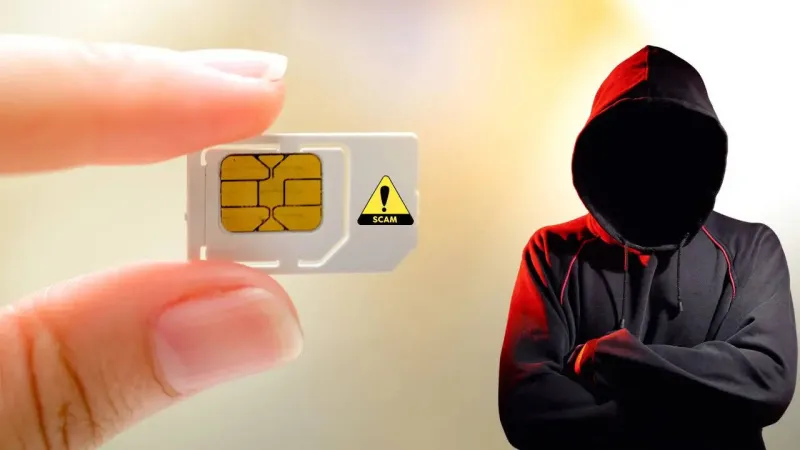
This is the architecture of a SIM swap attack: deceptively simple, devastatingly effective, and frustratingly difficult to stop once it is underway.
How the Exploit Actually Works
Every mobile phone operates through a Subscriber Identity Module — the SIM card that tells a carrier's network which device belongs to which account. When you upgrade a handset or lose a phone, carriers routinely transfer that association to a new SIM at the customer's request. This legitimate process, designed for convenience, is precisely what attackers weaponize.
The fraud unfolds in stages. First, the attacker aggregates personal data about the target — full name, address, date of birth, and the last four digits of a Social Security number. Much of this information is freely available through data broker websites, prior breach exposures, or a quick scan of a victim's social media profiles. Armed with these details, the criminal contacts the carrier's customer support line, impersonates the account holder, claims a lost or damaged SIM, and requests that the number be migrated to a SIM card already in the attacker's possession.
Once the transfer is approved, the victim's phone goes dark. Every call and text message — including one-time passcodes sent by banks, email providers, and cryptocurrency platforms — now routes to the attacker's device. Two-factor authentication, widely promoted as a cornerstone of account security, is rendered entirely useless.
Real People, Real Losses
The victims of SIM swapping span a wide demographic, though high-net-worth individuals and cryptocurrency holders are disproportionately targeted. In 2019, the Department of Justice charged a group of young Americans with stealing more than $2.4 million from victims across the country through coordinated SIM swap schemes. Several defendants had allegedly bribed carrier employees directly — a detail that underscores how the threat extends beyond social engineering alone.
Nicholas Truglia, one of the more prominent names prosecuted in this wave, was sentenced in 2023 after being implicated in SIM swap attacks that collectively stole tens of millions of dollars. His case drew attention not only for the scale of the theft but for how ordinary his methods were: phone calls, personal data, and carrier representatives who could not reliably distinguish a legitimate customer from a fraudster.
In 2022, the FBI's Internet Crime Complaint Center reported that SIM swapping complaints had surged nearly 400 percent compared to 2018, with adjusted losses exceeding $72 million in that year alone. Researchers believe the true figure is substantially higher, since many victims — particularly those who lose cryptocurrency — never file formal complaints.
The Structural Problem Inside Carrier Customer Service
The uncomfortable truth is that U.S. mobile carriers operate under enormous pressure to resolve customer calls quickly and without friction. That incentive structure is fundamentally incompatible with the rigorous identity verification that SIM swap prevention demands.
Authentication challenges at many carriers still rely on knowledge-based questions — mother's maiden name, last four digits of a Social Security number, billing address — data points that are routinely exposed in breaches or purchasable from data brokers for a few dollars. The Federal Communications Commission has acknowledged the systemic nature of the problem, and in late 2023 adopted new rules requiring carriers to implement more secure authentication methods and to notify customers immediately when a SIM change is requested on their account.
However, implementation timelines remain vague, enforcement mechanisms are still developing, and the rules do not eliminate the human element at the heart of the vulnerability. A determined social engineer who has done their research can still navigate customer service trees, escalate to supervisors, and eventually find a representative willing to process a transfer.
Carrier-Level Defenses You Probably Have Not Activated
The major U.S. carriers — AT&T, Verizon, and T-Mobile — each offer account-level protections that most subscribers have never enabled. These features are not advertised prominently, and many customers remain unaware they exist.
AT&T offers a feature called "Extra Security," accessible through the myAT&T account portal. When enabled, any SIM change or number port request requires the customer to provide a unique passcode in person at a retail store. Remote transfers over the phone become significantly harder to execute.
Verizon provides a "Number Lock" option that prevents number porting entirely until the customer explicitly disables it. The setting lives in the account security section of the My Verizon app.
T-Mobile maintains what it calls a "SIM Protection" toggle, available in account settings, which restricts SIM changes to verified in-store visits with government-issued identification.
Enabling these protections takes fewer than five minutes and meaningfully raises the cost of a SIM swap attack against your account.
Rethinking Two-Factor Authentication
For accounts that support it, migrating away from SMS-based two-factor authentication is the single most impactful step a user can take. Authenticator applications — such as Google Authenticator, Authy, or Microsoft Authenticator — generate time-sensitive codes that are tied to a physical device rather than a phone number. Because they function independently of the carrier network, a successful SIM swap does not grant an attacker access to these codes.
For the highest-value accounts, hardware security keys — physical devices that plug into a USB port or tap against a phone — represent the most robust available option. They are immune to both SIM swapping and phishing, since authentication requires physical possession of the key itself.
What to Do If Your Phone Loses Service Unexpectedly
If your phone drops service without explanation, treat it as a potential emergency rather than a routine outage. Call your carrier immediately from a different device, inform them you may be the victim of a SIM swap, and request that they freeze your account from further changes. Simultaneously, log into your most sensitive accounts — email, banking, cryptocurrency exchanges — and change passwords and authentication methods before the attacker can use your hijacked number to reset them.
Time is the decisive variable. Most attackers move within minutes of completing a successful swap, knowing that victims may notice the service disruption quickly. The faster you respond, the narrower the window of exposure.
The Broader Lesson
SIM swapping is not primarily a technology problem. It is a people problem — one that exploits the tension between customer convenience and account security at institutions that were never designed with this threat in mind. Until regulatory pressure and industry reform close the gap, the responsibility for protection falls largely on individual subscribers. Activating carrier-level locks, abandoning SMS-based authentication for critical accounts, and treating unexpected service outages with immediate suspicion are not paranoid behaviors. In the current threat environment, they are basic hygiene.