The Rogue Router at Gate B14: How Fake Hotspots Hunt Travelers

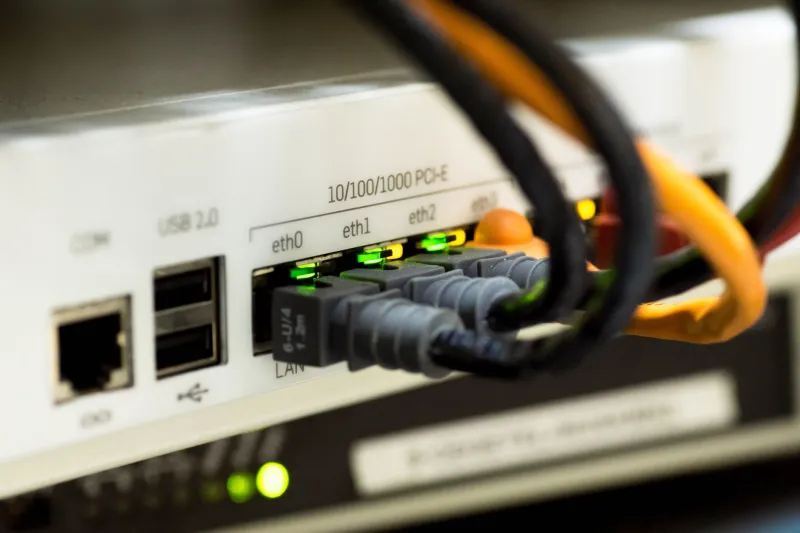
Photo: Jacktd, CC BY-SA 3.0, via Wikimedia Commons
The attack begins before the traveler does. Somewhere near a crowded departure gate, a laptop the size of a paperback broadcasts a wireless network named "Airport_Free_WiFi." It looks identical to the legitimate network printed on the signage ten feet away. It is not. It is an evil twin — a rogue hotspot configured to imitate a trusted one — and within minutes, dozens of phones connect to it automatically.
Security researchers have documented this technique at airports, hotels, and convention centers across the country. The equipment costs less than a plane meal. The skill required is modest. And the victims, in most cases, never know anything happened.
Anatomy of an Evil Twin Attack
Here is how a hypothetical attack unfolds, based on well-documented techniques reported by cybersecurity firms and the FBI.
First, the attacker sets up a hotspot with a convincing name, often cloning the SSID of the venue's real network. Modern devices remember networks and reconnect automatically, so many phones join without the traveler tapping anything.
Second, the attacker can position themselves between the victim and the internet — a man-in-the-middle position. In the most basic form, they simply observe unencrypted traffic. In more aggressive variants, the rogue network presents a fake captive portal: the familiar "enter your email to connect" page, except this one also asks for a password, or a hotel loyalty number, or — in the worst cases — pushes a phony software update that installs malware.
Third, the harvest. Login credentials typed into non-encrypted pages, session cookies that allow account hijacking without a password, and any file the device shares over the network are all within reach.
The FBI and the Federal Communications Commission have both issued warnings about these schemes in recent years, and hotel-chain Wi-Fi has repeatedly appeared in threat advisories as a preferred hunting ground — business travelers, after all, log into work systems from there.
Myth Versus Reality
Public Wi-Fi risk is often overstated in one direction and understated in another.
Myth: Public Wi-Fi is instantly catastrophic. Reality: Most of the web now uses HTTPS encryption, which scrambles traffic between your browser and the server. A passive snooper on a coffee-shop network cannot read your banking session the way they could a decade ago.
Myth: If it asks for a password, it's safe. Reality: Attackers happily share their hotspot's password with you. Knowing the Wi-Fi password says nothing about who controls the router.
Reality worth worrying about: evil twins, fake captive portals, and malicious prompts to install "updates." These are active attacks, not passive eavesdropping, and HTTPS alone won't save you if you're typing credentials into a site the attacker controls.
The Traveler's Checklist
-
Verify before you connect. Ask staff for the exact network name. Beware names that are one character off.
-
Turn off auto-connect. Configure your phone and laptop to forget networks and require manual connection.
-
Use a VPN on untrusted networks. A reputable VPN encrypts everything between your device and its server, blinding anyone in the middle.
-
Prefer your cellular connection. Phone hotspots and mobile data are dramatically harder to intercept than shared Wi-Fi.
-
Never install updates through a browser prompt. Software updates should come from the operating system's own updater, not a pop-up on a portal page.
-
Enable multi-factor authentication on email, banking, and work accounts, so a stolen password alone isn't enough.
-
When in doubt, don't. No email is urgent enough to justify logging in over a network you don't trust.
The Bigger Picture
Evil twin attacks are not sophisticated nation-state tradecraft; they are opportunism at scale. That is precisely why they persist. The traveler rushing to a gate is the softest of targets — distracted, time-pressed, and conditioned to connect first and think later.
The defense is equally unglamorous: skepticism, a VPN, and multi-factor authentication. The network at Gate B14 may or may not be what it claims. Your habits are the only thing you fully control.