Scan, Pay, Regret: How Fake QR Codes Took Over America's Parking Meters
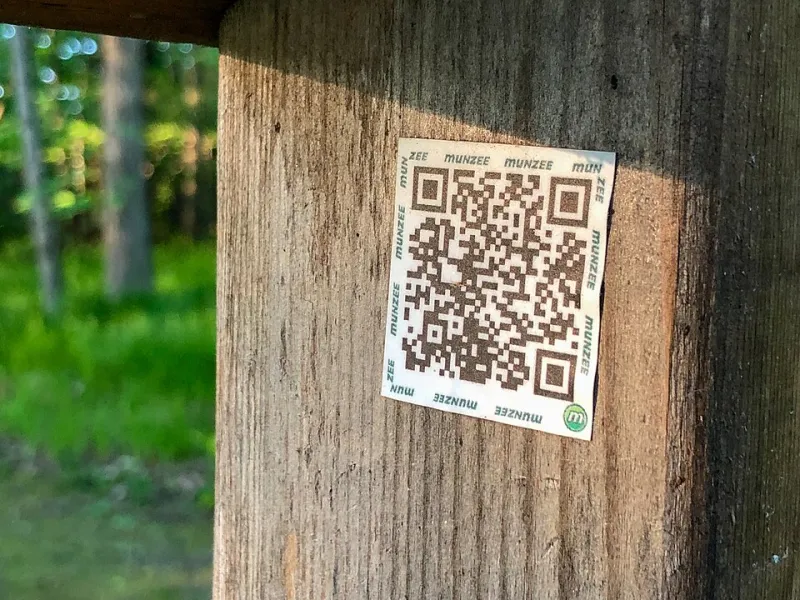
Photo: Tony Webster from Minneapolis, Minnesota, United States, CC BY 2.0, via Wikimedia Commons
A driver pulled into a municipal garage in Ohio for a forty-minute appointment and left with a $1,900 debit to a payment processor she had never heard of. She had done exactly what the signage asked: pointed her phone at the square code bolted to the pay station, tapped the link that appeared, and typed her card number into a page that looked, in every respect that mattered at a glance, like the city's own payment portal.
That is the entire trick. America's meters, café tables and delivery notices are now upholstered in machine-readable squares, and almost nobody stops to ask who printed them.
The anatomy of a quishing attack
Quishing — phishing delivered through a QR code instead of an email — has graduated from curiosity to nuisance to durable revenue stream. The mechanics are unremarkable, which is precisely why they work.
A typical scheme runs in four movements. First, the sticker: a printed square, sized to sit flush over the legitimate one, on vinyl that survives a season of weather. Second, the destination: a domain that borrows the city's name, a hyphen and a plausible suffix, close enough that a hurried eye reads official. Third, the ask: a card number, an expiration date, a billing ZIP — or sometimes merely a dollar or two of verification, which is cheaper to dispute than to investigate. Fourth, the exit: a thank-you page that redirects to a genuine parking app, so nothing feels wrong until the statement arrives weeks later.
Why the camera does the scammers' work
For fifteen years, security trainers told consumers to hover over a link before clicking. QR codes retired that advice without announcing it. A URL printed on paper, embedded in pixels and opened directly by a phone's camera is invisible right up until the moment it is already loading — and even then it arrives inside an in-app browser that hides the address bar or truncates it to a dozen characters.
Mobile platforms have improved. Recent operating system versions surface the destination domain before the browser opens, and both major ecosystems now warn on known-malicious links. But warnings are easy to dismiss, and the deeper problem persists: the medium deletes the moment of judgment on which a generation of advice depended.
Red flags worth memorizing
Consumers need not distrust every square code, but a handful of habits cut exposure sharply.
- The sticker is applied, not manufactured. A code that sits proud of the surface, peels at a corner, or covers an older code deserves removal rather than scanning. Legitimate municipal codes are typically engraved, laminated or printed as part of the meter's own faceplate.
- The price is wrong. If the app quotes a rate that contradicts the posted tariff, or assesses a convenience fee the city has never charged, stop there.
- The page asks for more than money. A parking payment does not require a Social Security number, a photograph of a driver's license or an email password.
- The domain is a lookalike. A hyphen, an extra word or a country-code suffix on a municipal payment page is a tell, not a quirk.
- The urgency is manufactured. A warning that the vehicle will be cited within ten minutes is a pressure tactic, not a policy.
One rule outranks the list: type the city's parking address directly, or open an app you already trust, and pay there. If a meter insists on a scan, scan once and read the address line before the page finishes rendering.
What cities and merchants can get right
Policy responses matter more than alarm. Several municipalities now audit pay stations weekly, photograph each code and log where it points. Others print the destination address in plain text beside the square, so a user can compare what the camera found against what the city published — a cheap control that defeats most sticker swaps.
Restaurants have an equivalent option: laminated table tents that resist quiet overlays, and menus that spell out the ordering address in words. A code on a paper flyer tucked into a takeout bag, by contrast, is nearly impossible to police.
Merchants can register lookalike domains defensively, and payment processors can flag freshly registered domains that mimic municipal naming conventions — brand protection long standard in banking but rarely applied to city hall.
The federal posture is uneven. The Federal Trade Commission has pursued QR-based schemes and keeps publishing consumer guidance, and the FBI's Internet Crime Complaint Center has flagged the trend in successive annual reports. Enforcement, however, invariably arrives after the money has moved.
The reasonable middle
None of this argues for a QR-free life. The technology is convenient, and a blanket refusal would be as impractical as refusing to use the web. What it argues for is a specific, learnable skepticism — about stickers, about address bars, about any payment page that appears after a scan rather than after a search.
The square code is not the hazard. The assumption that a printed square must be trustworthy is. That assumption took years to build, and it will take a few well-publicized prosecutions and a great many laminated signs to unwind.