What Your Apps Know About You: The Quiet Science of Behavioral Profiling
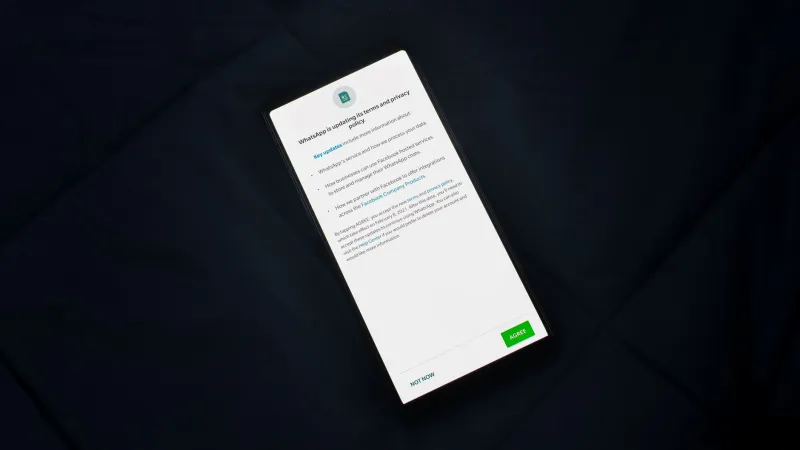
There is a version of your life that you have never written, never approved, and almost certainly never read. It exists in the servers of data brokers, advertising platforms, and analytics firms — assembled not from anything you deliberately submitted, but from the ambient signals your smartphone emits every time you open an app. Welcome to behavioral profiling: the quiet science that has made your daily habits one of the most valuable commodities in the modern economy.
The Data You Think Is Harmless
Most Americans intuitively understand that social media platforms track what they like and share. Fewer appreciate that the same surveillance logic has migrated into apps with no obvious advertising purpose — fitness trackers, recipe organizers, flashlight utilities, even certain keyboard replacements. The data these applications collect is rarely a single dramatic piece of information. It is, instead, an accumulation of what researchers sometimes call "behavioral exhaust": the incidental byproducts of ordinary use.
Consider what a moderately popular free weather app might legitimately collect under a standard terms-of-service agreement: precise GPS coordinates updated multiple times per day, device identifiers, the times at which you open the app, how long you linger on certain screens, which other apps are installed, and your Wi-Fi network names. Individually, none of those data points is particularly sensitive. Aggregated across weeks and cross-referenced with purchases, browsing history, and location patterns, they constitute something considerably more intimate — a behavioral fingerprint that can predict income bracket, political alignment, health status, and relationship dynamics with unsettling accuracy.
The Legal Gray Area That Makes This Possible
The United States currently lacks a comprehensive federal privacy law equivalent to the European Union's General Data Protection Regulation. What exists instead is a patchwork of sector-specific statutes — HIPAA for health data, COPPA for children's information, FCRA for credit reporting — that leave vast categories of behavioral data effectively unregulated at the national level. Some states, most notably California through its California Consumer Privacy Act, have enacted meaningful protections. But for the majority of American consumers, the primary legal instrument governing what an app can collect is the privacy policy they scrolled past during installation.
Those policies are, by design, permissive. Language such as "we may share your information with trusted partners" or "we collect data to improve your experience" is legally sufficient to authorize a remarkably broad range of data transfers. App developers frequently embed software development kits — SDKs — from third-party analytics and advertising companies. Each SDK is, in effect, a miniature surveillance tool operating inside the host application, transmitting data to its own servers independently of whatever the app itself does with your information. A single app may contain a dozen such SDKs, each with its own data-sharing relationships.
How Behavioral Data Is Weaponized
The downstream uses of behavioral profiles extend well beyond targeted advertising, though that remains the dominant commercial application. Insurance underwriters have explored purchasing mobility data to assess risk. Employers have reportedly used behavioral analytics platforms to evaluate job candidates. Political campaigns purchase audience segments built on behavioral signals. And in the most troubling cases, data brokers sell information to parties whose intentions are never disclosed to the consumer at all.
For cybersecurity purposes, the threat is compounded by aggregation. A data broker's profile on you may be accurate enough to answer the knowledge-based authentication questions your bank uses to verify your identity. It may contain enough detail to make a spear-phishing email — one crafted to appear as though it comes from someone who genuinely knows your habits — convincingly persuasive. The behavioral data collected "legitimately" by a recipe app does not stay in a recipe app's ecosystem. It travels, it merges, and it eventually surfaces in contexts its original collector never anticipated.
Auditing Your Own Digital Footprint
The good news is that meaningful mitigation is available to any consumer willing to invest a modest amount of time. The following steps represent a practical starting point.
Review app permissions systematically. On both iOS and Android, the operating system provides a centralized permissions dashboard. Navigate to your device's privacy or security settings and examine which applications have access to your location, microphone, camera, contacts, and health data. Revoke any permission that does not have an obvious, immediate functional justification.
Limit ad tracking at the platform level. Apple's App Tracking Transparency framework requires apps to request permission before tracking you across third-party platforms. Ensure that permission is denied by default in your iOS privacy settings. Android users should navigate to Privacy > Ads and opt out of ad personalization.
Audit your installed applications ruthlessly. Free applications with no clear business model are almost invariably monetizing your data. If you have not used an app in the past thirty days, delete it. The data collection stops when the app is gone.
Use a DNS-based content blocker. Services such as NextDNS or Pi-hole can block known tracker domains at the network level, preventing SDK telemetry from ever leaving your device. Many commercial VPNs now include similar tracker-blocking functionality.
Submit opt-out requests to data brokers. Under the CCPA and similar state laws, you have the right to request that brokers delete your information. Services such as DeleteMe or Privacy Bee automate this process, though it requires ongoing maintenance as brokers continually re-aggregate data.
Read the privacy label before installing. Apple's App Store displays privacy nutrition labels summarizing what each app collects. Google Play has introduced similar disclosures. They are imperfect, but they provide a useful first filter.
The Broader Accountability Question
Individual action matters, but it does not resolve the structural problem. Behavioral data collection at this scale is possible because the legal and regulatory environment has permitted it to flourish. Meaningful federal privacy legislation — specifically, legislation that restricts the sale of behavioral data to third parties and mandates genuine opt-in consent rather than buried opt-out provisions — remains the most consequential intervention available. Until that legislation exists, the burden of protection falls disproportionately on consumers who may not realize they are being profiled in the first place.
The apps on your phone are not passive tools. Many of them are, functionally, data-collection instruments that happen to offer a secondary service. Understanding that distinction is the first step toward reclaiming some measure of control over the digital record being compiled in your name.